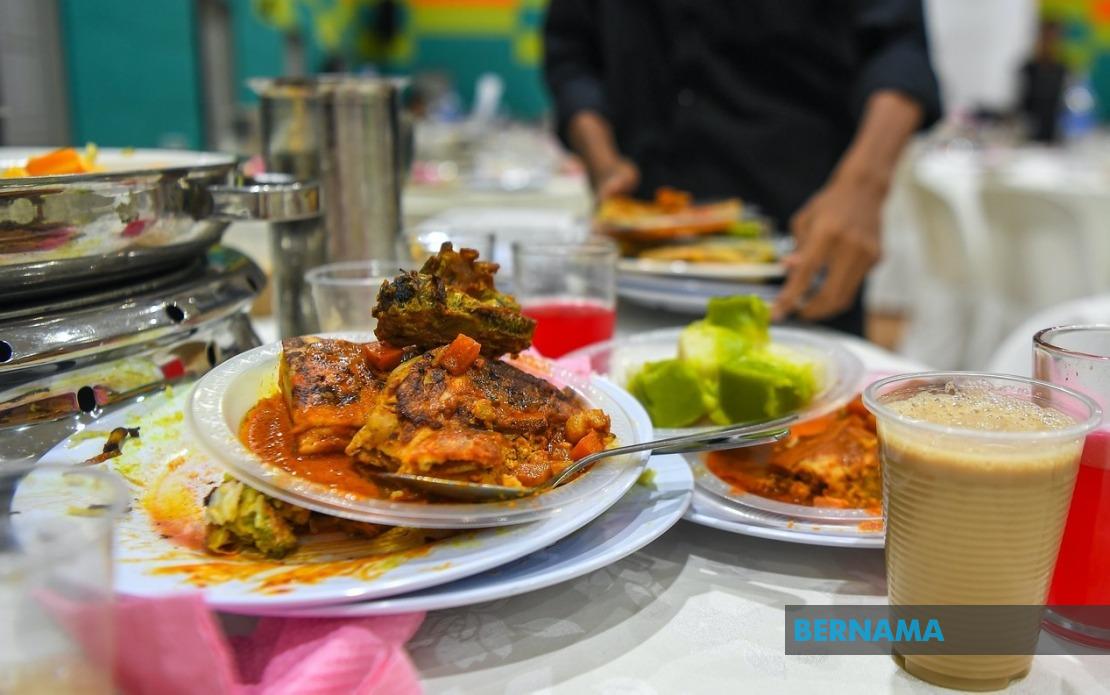
Food waste across Malaysian households has become increasingly linked to rising income levels and the adoption of modern consumption patterns, particularly in urban and affluent areas, according to Datuk Seri Dr Mohd Uzir Mahidin, who recently retired after nearly nine years as Chief Statistician. The correlation between prosperity and wastage suggests that as Malaysian families move beyond survival-level spending, their purchasing habits have fundamentally shifted, often exceeding genuine household requirements and reflecting deeper patterns of consumer behaviour that merit serious examination.
Dr Mohd Uzir's observations point to a paradox of economic development: as incomes rise and basic needs are consistently met, households tend to accumulate goods beyond what they actually consume. The phenomenon extends beyond mere overbuying to encompass a cultural shift in how Malaysians perceive food abundance. In interviews conducted as part of national surveys, families described frequent scenarios where promotional purchasing decisions by parents clash with independent buying by household members, resulting in duplicate acquisitions that deteriorate in refrigerators before use. This disconnect between purchase intentions and actual consumption reveals a gap in household communication and meal planning that has widened as disposable income has grown.
The distinction between urban and rural food waste patterns illuminates how development trajectories shape environmental and social outcomes. While cities consistently demonstrate higher wastage rates, rural communities are increasingly following similar trends, driven partly by the adoption of catering services for traditional kenduri gatherings. Where previous generations prepared elaborate meals at home, modern rural families increasingly outsource food preparation, introducing economies of scale that inadvertently encourage oversupply. Urban areas present their own complications: multiple social functions occurring on the same weekend often feature identical menus, with guests attending several gatherings and inevitably leaving untouched portions at each venue. States such as Selangor, with their higher per capita incomes and denser social calendars, experience proportionally greater food wastage as residents navigate packed weekend schedules across numerous celebrations and ceremonies.
Economic theory suggests that consumer perception of value diminishes when abundance masks scarcity. When food is readily available or heavily discounted through promotional campaigns, shoppers unconsciously downgrade their mental assessment of its worth. This psychological mechanism extends across multiple consumer categories: the same dynamic driving food waste manifests in online clothing purchases, where low prices encourage bulk buying that ultimately ends in disposal. The absence of perceived scarcity—once a fundamental driver of careful consumption—has evaporated for many Malaysian households, replaced by a mindset where wastefulness carries minimal social or psychological cost. This represents a significant departure from the thrift-conscious approach that characterised earlier generations.
New data from the National Household Indicators Survey (NHIS) 2025 quantifies the scope of household food waste across Malaysia, estimating annual per capita disposal between 31.9 kilogrammes and 97.3 kilogrammes. The variation reflects differing consumption patterns across income brackets and urban-rural divides. Processed and cooked foods dominate the waste statistics, with 94.1 per cent of households reporting disposal of prepared foods compared with 88.7 per cent for raw ingredients. This discrepancy suggests that Malaysian families waste more food after preparation than before, pointing to issues with portion control, menu planning, and household appetite assessment. The prevalence of prepared food waste exceeding raw food waste indicates that cooking decisions frequently miss the mark in matching supply to actual consumption.
Within the raw food category, vegetables represent the largest waste component at 29.1 per cent, followed by fruits at 22.4 per cent and fish or seafood at 15 per cent. These categories share characteristics that facilitate rapid spoilage: they require careful storage, have limited shelf lives, and deteriorate visibly, making them frequent casualties of forgotten pantry items. For processed and cooked dishes, rice emerges as the leading waste category at 16.7 per cent, with vegetables again featuring prominently at 15.8 per cent and purchased prepared foods accounting for 13.8 per cent. The dominance of rice in cooked food waste is particularly significant given its cultural centrality in Malaysian cuisine and its role as a dietary staple, suggesting that even fundamental meal components are frequently prepared in excess.
The infrastructure for managing food waste remains underdeveloped across Malaysian households, with current practices reflecting limited environmental consciousness or waste management capacity. Only 20.7 per cent of households separate food waste from general household refuse, while 79.3 per cent dispose of all waste together, indicating that food waste segregation has failed to establish itself as routine household practice. This low separation rate hampers potential for composting, animal feed production, or other circular economy initiatives that could redirect food waste toward productive uses. The absence of established separation habits reflects limited public education campaigns, unclear incentive structures, and the general invisibility of waste management implications within household decision-making.
Dr Mohd Uzir, who assumed leadership of the Department of Statistics Malaysia in 2017 and oversaw its transformation into the nation's strategic data institution, brought these observations to public attention as he concluded 36 years of public service. His perspective encompasses decades of observation regarding Malaysian consumption patterns and their evolution alongside economic development. The Chief Statistician's characterisation of food waste as fundamentally linked to appreciation gaps suggests that cultural and educational interventions might address consumption patterns more effectively than regulatory approaches alone. The challenge extends beyond simple awareness to encompassing deeper shifts in how Malaysian society values abundance and manages the psychological transition from scarcity to plenty.
The findings carry significant implications for Malaysia's sustainability agenda and food security planning. As a nation increasingly focused on circular economy principles and environmental stewardship, the revelation that food waste correlates with income and urbanisation suggests that wealthy, developed areas—typically those with greatest influence over policy and consumer trends—also bear disproportionate responsibility for addressing the problem. Future food security strategies must account not only for production capacity but for consumption rationality and waste reduction across income brackets. The data indicates that affluent households possess both the capacity and the moral imperative to pioneer more thoughtful consumption practices that might eventually cascade across Malaysian society. Without intervention, rising incomes and continued urbanisation will likely accelerate food waste trajectories, offsetting gains from productivity improvements in the agricultural sector.

