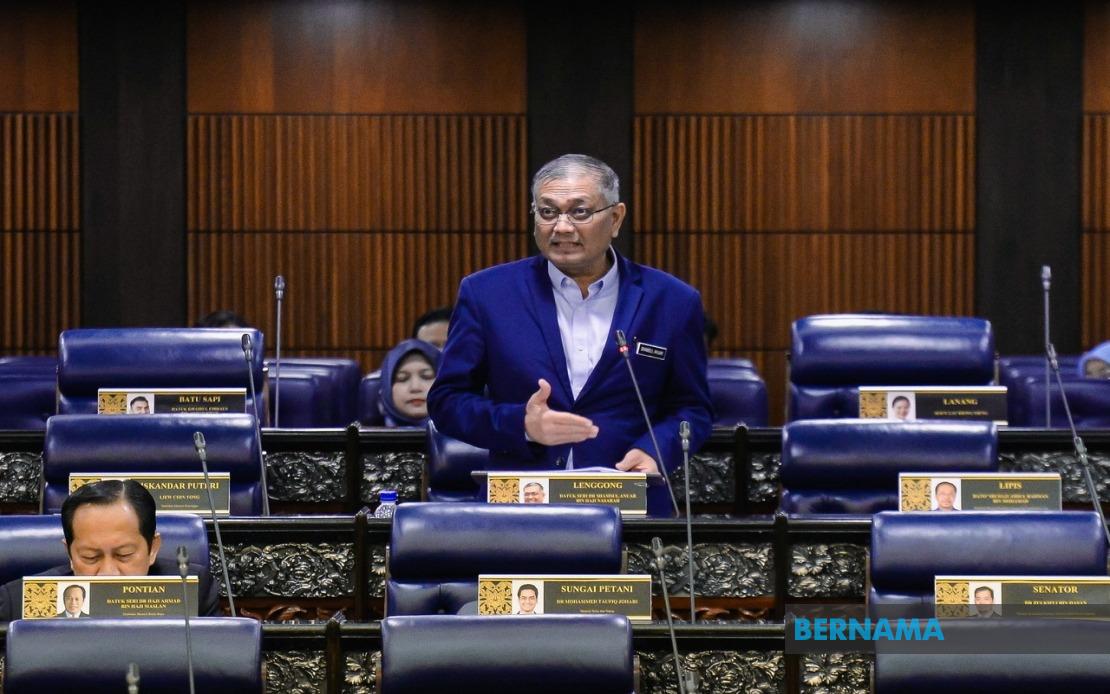
Illegal cryptocurrency mining in Malaysia has become the target of an intensified crackdown, with authorities seizing in excess of 75,000 mining machines during more than 3,000 operations nationwide since 2022 through May of this year. The scale of enforcement reflects mounting concern within government about the proliferation of unlicensed digital asset extraction activities that drain the national power grid and fund criminal enterprises. Deputy Home Minister Datuk Seri Dr Shamsul Anuar disclosed the figures during parliamentary proceedings, underscoring the severity of a problem that has drawn coordinated action across multiple state and federal agencies.
The enforcement campaign represents collaboration between several institutional players, each bringing distinct expertise to the problem. The Royal Malaysia Police serve as the primary law enforcement body, coordinating with Tenaga Nasional Berhad, the nation's main electricity utility, alongside local municipal authorities and other government agencies tasked with investigating financial crimes and regulating digital activities. In excess of 629 individuals have been detained across these operations, signalling that the authorities are pursuing both operators of substantial mining facilities and smaller-scale participants in the illegal sector. This multi-agency approach acknowledges that cryptocurrency mining violations simultaneously constitute theft of electricity, breach of utility regulations, and potentially money laundering or organised crime, requiring expertise beyond any single organisation.
The Home Ministry has repositioned its enforcement strategy to emphasise anticipatory action rather than reactive response. Shamsul Anuar highlighted that the ministry is prioritising intelligence development and technological capabilities to pinpoint emerging mining hotspots before operations commence, enabling swifter and more surgical interventions. This shift toward predictive enforcement reflects lessons learned from earlier phases of the crackdown, when authorities discovered mining operations only after they had consumed vast quantities of electricity and established entrenched networks within communities. By leveraging data analytics and collaborative intelligence with TNB, which monitors anomalous consumption patterns and suspicious metre installations, authorities aim to disrupt mining networks in their infancy rather than after they have achieved scale.
The economic motivation driving illegal cryptocurrency mining persists despite enforcement escalation. The deputy minister acknowledged that strong demand for digital assets globally, combined with potential profits from price fluctuations, creates powerful incentives for participants willing to operate outside legal frameworks. Mining operations offer the promise of substantial returns for relatively modest initial capital investment, particularly when operators eliminate their largest expense—electricity—through theft or unlicensed connections. This financial allure particularly affects communities where unemployment exists or where existing economic opportunities appear limited, making mining operations attractive to individuals seeking rapid wealth generation or those recruited into larger criminal enterprises that coordinate mining networks across multiple locations.
The government has sought to draw clear legal distinctions between permissible and prohibited cryptocurrency activities. Cryptocurrency ownership and trading remain legal within Malaysia, reflecting acknowledgment that digital assets represent a legitimate asset class with growing adoption globally. However, cryptocurrency mining itself operates in a legally restricted zone. Mining becomes unlawful specifically when it involves unauthorised electricity connections, tampering with metering equipment, disrupting power supply infrastructure, or proceeding without required operational licences. This definitional approach allows the government to permit participation in cryptocurrency markets while criminalising the extraction activities that impose direct costs on the power system and broader economy.
Regulatory oversight of cryptocurrency activities in Malaysia is distributed across multiple agencies according to their statutory mandates and expertise. The Securities Commission Malaysia holds responsibility for supervising digital assets under established legal frameworks, while Bank Negara Malaysia manages broader financial system stability, payment system integrity, and enforcement of anti-money laundering compliance standards. This distributed regulatory architecture reflects international best practice but also creates coordination challenges, as cryptocurrency activities often intersect multiple regulatory domains simultaneously. The division of labour enables specialised oversight but requires effective communication channels to prevent regulatory gaps or duplicative effort.
The electricity theft component of illegal mining operations imposes measurable costs on TNB and, ultimately, legitimate consumers and taxpayers. Mining operations consume extraordinary quantities of power—a single facility may draw as much electricity as a small industrial estate—and the diversion of supply through illegal connections destabilises grid management and necessitates investment in detection and prevention infrastructure. TNB has responded by deploying sophisticated monitoring systems, training technical staff to identify illegal installations, and integrating meter data with law enforcement intelligence. The cumulative losses from stolen electricity represent not merely corporate harm but broadly distributed costs borne by society through higher utility rates and reduced system reliability.
The persistence of illegal mining despite substantial enforcement represents an ongoing contest between authorities and operators who continuously adapt techniques to evade detection. Mining operations have relocated to rural areas with weaker regulatory presence, dispersed across multiple smaller facilities rather than concentrating in obvious industrial clusters, and invested in increasingly sophisticated methods to bypass electrical metering and monitoring systems. Some operators maintain legitimate electricity accounts while running unauthorised mining equipment on parallel systems that draw from clandestine connections, complicating detection efforts. This dynamic suggests that enforcement success, while tangible in terms of machines seized and arrests made, may represent suppression of the activity rather than its elimination.
The international context of cryptocurrency mining adds complexity to Malaysia's enforcement challenge. Global cryptocurrency markets and mining operations operate across borders without regard to national jurisdictions, meaning that miners displaced from Malaysia may simply relocate operations to other Southeast Asian jurisdictions with less rigorous enforcement or relocate mining compute resources to cloud-based platforms outside direct government reach. Some analysts suggest that cryptocurrency's fundamental design features, which deliberately disperse validation across globally distributed networks, make completely eliminating mining within national borders technically infeasible without wholesale prohibition. This reality shapes enforcement toward damage mitigation and targeted prosecution rather than total eradication.

