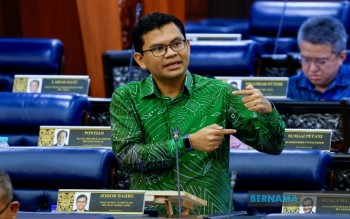
Small and medium enterprises facing financial strain have access to substantial untapped support, with Economy Minister Akmal Nasrullah Mohd Nasir confirming that more than RM4 billion from a RM5 billion allocation under Bank Negara Malaysia's Small and Medium Enterprise Stabilisation Relief Facility remains available to help businesses navigate cash flow pressures and operational challenges. Speaking during ministerial questioning in Parliament on June 25, Akmal outlined the steady uptake of the financing scheme, noting that approvals totalling over RM700 million had been extended to more than 1,000 enterprises by June 18, 2026, indicating both the demand for such facilities and the significant headroom for additional applications.
The persistence of global economic uncertainty and supply chain disruptions continues to weigh on Malaysia's small business sector, prompting the government to maintain comprehensive support mechanisms. The SME Stabilisation Relief Facility represents one pillar of the administration's broader response to business pressures, addressing a critical gap where cash flow constraints threaten operational continuity. Akmal's remarks came in response to parliamentary questions from Mohd Syahir Che Sulaiman (PN-Bachok) about government mitigation measures following rising job losses and business downsizing triggered by supply crises and international economic volatility. The breadth of available funding signals government intent to ensure that financial constraints do not force otherwise viable enterprises into closure.
Beyond the SME Stabilisation Relief Facility, the government has established a parallel financing guarantee mechanism administered through Syarikat Jaminan Pembiayaan Perniagaan Bhd, which carries an additional RM5 billion allocation aimed at de-risking MSME lending. By providing credit guarantees, this facility lowers barriers for smaller enterprises to access bank financing, a structural challenge that has historically constrained growth in Malaysia's MSME sector. The twin approach—direct relief financing paired with guarantee schemes—demonstrates recognition that financial institutions remain hesitant to lend to businesses perceived as high-risk, particularly during economic downturns when SMEs lack collateral or established track records.
Financial institutions participating in both schemes have committed to processing applications within a seven-working-day window, a commitment designed to accelerate relief delivery when timing is critical for businesses facing immediate cash crunches. Akmal encouraged SMEs to approach their respective banks directly to identify tailored solutions aligned with their operational requirements. This decentralised approach places the onus on individual enterprises to initiate contact rather than creating centralised application portals, potentially limiting take-up among smaller operators unfamiliar with formal banking channels or without established relationships with lenders. Nevertheless, the stated commitment to rapid processing represents an attempt to reduce bureaucratic friction that has historically plagued government-backed financing initiatives.
The government's intervention strategy extends significantly beyond direct financing, encompassing the Progressive Acceleration for Capability and Employability (PACE) Economic Resilience Package worth over RM710 million. This broader initiative targets employment preservation and business continuity across four key dimensions: social protection for displaced workers, training and job placement initiatives, support for gig economy participants, and development of young talent within the SME ecosystem. The multi-pillar approach reflects acknowledgment that business survival depends not solely on access to capital but on maintaining workforce stability, skills relevance, and labour market flexibility.
Under the PACE framework, PERKESO—Malaysia's social security institution—has received over RM580 million to strengthen the Employment Insurance System, providing income support to workers who have lost jobs and reducing household financial distress that cascades into reduced consumer spending. This social safety net protects aggregate demand during downturns, benefiting businesses by sustaining customer purchasing power. Complementary allocations include RM100 million channelled through HRD Corp for training and job placement activities, supported by the MYFutureJobs digital matching platform, which seeks to accelerate workforce reallocation toward growth sectors.
The government has also recognised the structural shift toward gig work, allocating RM20 million through the Skills Education Fund Corporation to provide training for independent workers and platform-based service providers who face particular vulnerability during economic contractions. An additional RM10 million through TalentCorp supports industrial training specifically targeting SMEs and start-ups, recognising that capability gaps within smaller enterprises often constrain growth and competitiveness. These training investments represent long-term human capital development alongside immediate relief measures, attempting to position enterprises for recovery once economic conditions stabilise.
Monitoring of essential goods and raw material supplies has emerged as another priority, with government attention focused on manufacturing, food production, agriculture, and services sectors where supply volatility most directly impacts operations and consumer prices. This supply-side management complements demand-side financing support, addressing the systemic dimension of current economic pressures rather than treating them solely as cash flow problems amenable to credit solutions. Malaysian manufacturers, in particular, depend on secure supply chains for imported inputs, making government surveillance of global and regional supply conditions a practical necessity in an interconnected economy.
Akmal indicated that the government intends to present a detailed ministerial statement addressing the global supply crisis in the Dewan Rakyat the following Monday, subject to parliamentary approval. This commitment to formal legislative communication suggests the government recognises the political salience of supply chain disruptions and their visible impact on consumer prices and business operations. The statement will presumably articulate government strategy for mitigating supply volatility and supporting affected sectors, providing parliamentarians and the public with clarity on medium-term economic management approaches.
For Malaysian SMEs, the confluence of available financing, employment support, and skills development initiatives creates multiple pathways to navigate current economic headwinds. However, the gap between announced allocations and actual utilisation—with RM4 billion of RM5 billion remaining undrawn—suggests potential obstacles in awareness, accessibility, or alignment between available schemes and actual business needs. Enterprises should proactively investigate whether these facilities match their specific circumstances, while policymakers may need to enhance communication and streamline application processes to ensure support reaches intended beneficiaries. The comprehensive nature of government intervention indicates recognition that economic resilience in the MSME sector requires coordinated action across financing, employment, skills, and supply management domains.

