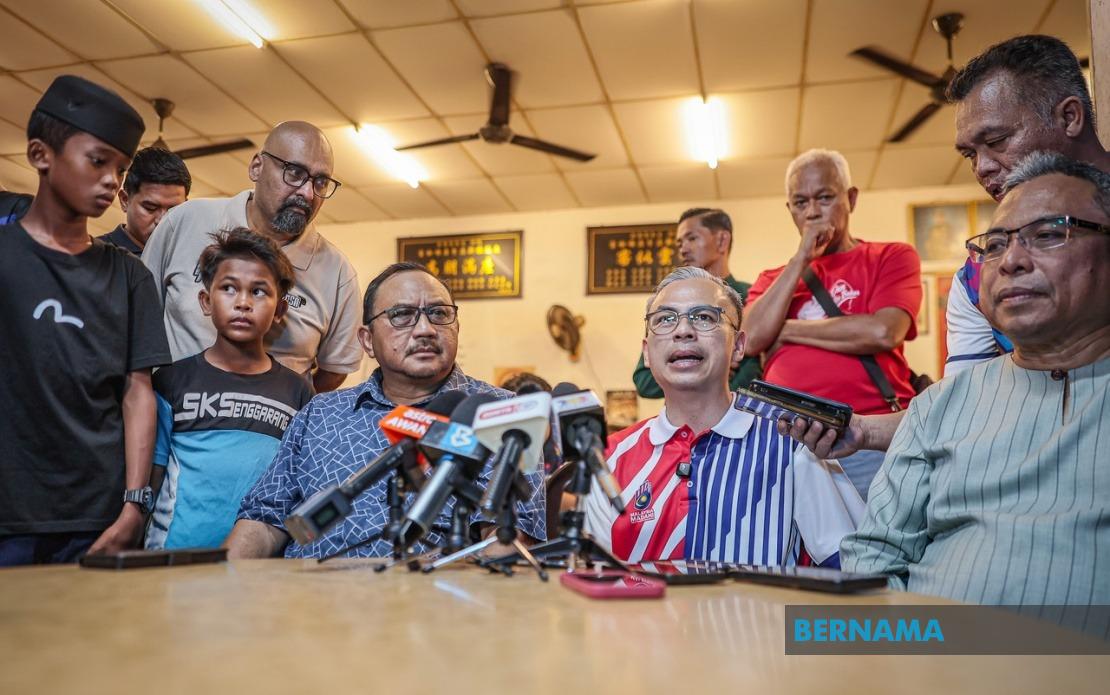
Pakatan Harapan is preparing for the 16th Johor State Election by orchestrating a coordinated campaign that marries conventional community engagement with modern digital platforms. The coalition's approach, detailed by Communications Director Datuk Fahmi Fadzil at a media briefing in Batu Pahat, reflects recognition that effective electoral messaging in 2024 requires simultaneous penetration across multiple audience segments—from urban millennials consuming content online to rural constituencies still relying on personal interaction and word-of-mouth communication.
The campaign architecture hinges on fact-based communication, a deliberate emphasis that underscores PH's concern about misinformation in the information ecosystem. Fahmi stressed that accuracy and verifiable policy proposals form the foundation of the coalition's messaging discipline. This methodological choice carries particular significance for Malaysian voters who have grown increasingly sceptical of unsubstantiated claims during election cycles, and it positions PH as the coalition committed to transparent, evidence-driven governance conversations rather than sensationalism.
PKR, which will contest 20 seats in the election, is moving swiftly into active campaign mode immediately after nomination proceedings conclude. Senior party figures have already been assigned to key constituencies, with Fahmi himself heading to Semerah while Deputy President Nurul Izzah Anwar provides on-ground support to Senggarang candidate Onn Abu Bakar. The party has established a dedicated media group specifically designed to disseminate candidate information rapidly, capitalising on the speed advantage of digital distribution channels while maintaining message consistency across multiple platforms.
The infrastructure supporting this campaign extends beyond simple social media posting. By establishing a formal media coordination structure, PH is attempting to manage information flow strategically, ensuring that candidate announcements, policy positions, and event schedules reach supporters and undecided voters with minimal delay and maximum clarity. This level of organisational refinement suggests the coalition recognises that campaign effectiveness increasingly depends on operational efficiency—the capacity to mobilise information and supporters faster than competing political forces.
PH's campaign narrative prominently features the productive collaboration between federal and state governments in driving developmental initiatives. The Rapid Transit System Link and the Johor-Singapore Special Economic Zone feature prominently in this narrative, framed as tangible evidence that PH governance produces measurable outcomes. For Malaysian voters evaluating political parties on deliverables rather than rhetoric, these infrastructure projects and economic initiatives provide concrete reference points. The coalition argues that such developments demonstrably reduce inter-district inequality and catalyse sustainable economic expansion—metrics that resonate with constituents concerned about their economic futures and regional competitiveness.
The track record argument extends to PH-governed states where the coalition has demonstrated longevity and institutional capability. Selangor, Negeri Sembilan, and Penang are presented as proving grounds where PH's governance philosophy has translated into substantive results over multiple electoral cycles. This multi-state governance portfolio distinguishes PH from parties with more limited or contested administrative records. For Johor voters assessing which coalition possesses both the experience and temperament to govern competently, this comparative advantage matters significantly.
Candidate positioning appears strategically calibrated to leverage prominent figures with demonstrated track records. The fielding of Dr Maszlee Malik in Puteri Wangsa and Onn Abu Bakar in Senggarang signals an attempt to project competence and fresh political energy. Fahmi's confidence in these candidates suggests PH believes it can attract voters through combination of experienced governance and emerging leaders, appealing simultaneously to constituencies prioritising stability and those demanding generational renewal.
A state-specific manifesto represents another dimension of PH's campaign sophistication. Rather than relying solely on federal-level party platforms, the coalition is developing Johor-tailored policy commitments that address state-specific priorities and challenges. This granular approach acknowledges that effective political messaging requires local resonance—policies must address Johor voters' particular concerns rather than generic national talking points. The forthcoming manifesto will likely emphasise issues directly affecting Johor residents, from infrastructure to economic development to social welfare.
Election integrity receives institutional attention through a special task force convening the Malaysian Communications and Multimedia Commission, the Election Commission, the Royal Malaysia Police, and the Malaysian Media Council. This collaborative framework specifically targets misinformation monitoring and suppression throughout the election period. The formation of such oversight mechanisms reflects a broader democratic concern about false information undermining electoral fairness, and it represents commitment to maintaining electoral integrity at a structural level rather than leaving information validation to individual citizens.
The Hasrat MADANI programme in which Fahmi participated—including attendance at a community screening of the film Blood Brothers—demonstrates how PH integrates cultural and social engagement into electoral strategy. This approach recognises that campaign effectiveness extends beyond policy announcements and rallies. By participating in community-oriented cultural events, PH builds personal connections with voters in informal settings where political messages can take root through social solidarity rather than confrontational debate. The accessibility demonstrated through such grassroots participation humanises political leadership and creates positive associational experiences that influence voting behaviour.
For Malaysian readers following state elections closely, PH's Johor strategy illuminates broader trends in Southeast Asian electoral politics. The blend of digital and grassroots engagement reflects global shifts toward hybrid campaign models that simultaneously exploit technological distribution advantages while maintaining relational politics that digital platforms alone cannot replicate. The emphasis on development credentials and governance performance suggests that Malaysian voters increasingly evaluate parties on administrative competence rather than ideological purity, a maturation of electoral preferences that rewards coalitions with demonstrable delivery records.
The campaign unfolds within a broader context where Malaysian politics has become increasingly competitive and volatile. Voter polarisation, shifting demographic composition, and increased political awareness mean that electoral success requires sophisticated campaign coordination. PH's documented approach—combining fact-based messaging, multi-platform distribution, development narratives, and candidate visibility—represents the operational sophistication now expected in competitive Malaysian electoral contests. Whether this strategy successfully translates into voting behaviour in Johor will provide important indicators about the coalition's broader electoral viability heading into future national contests.

