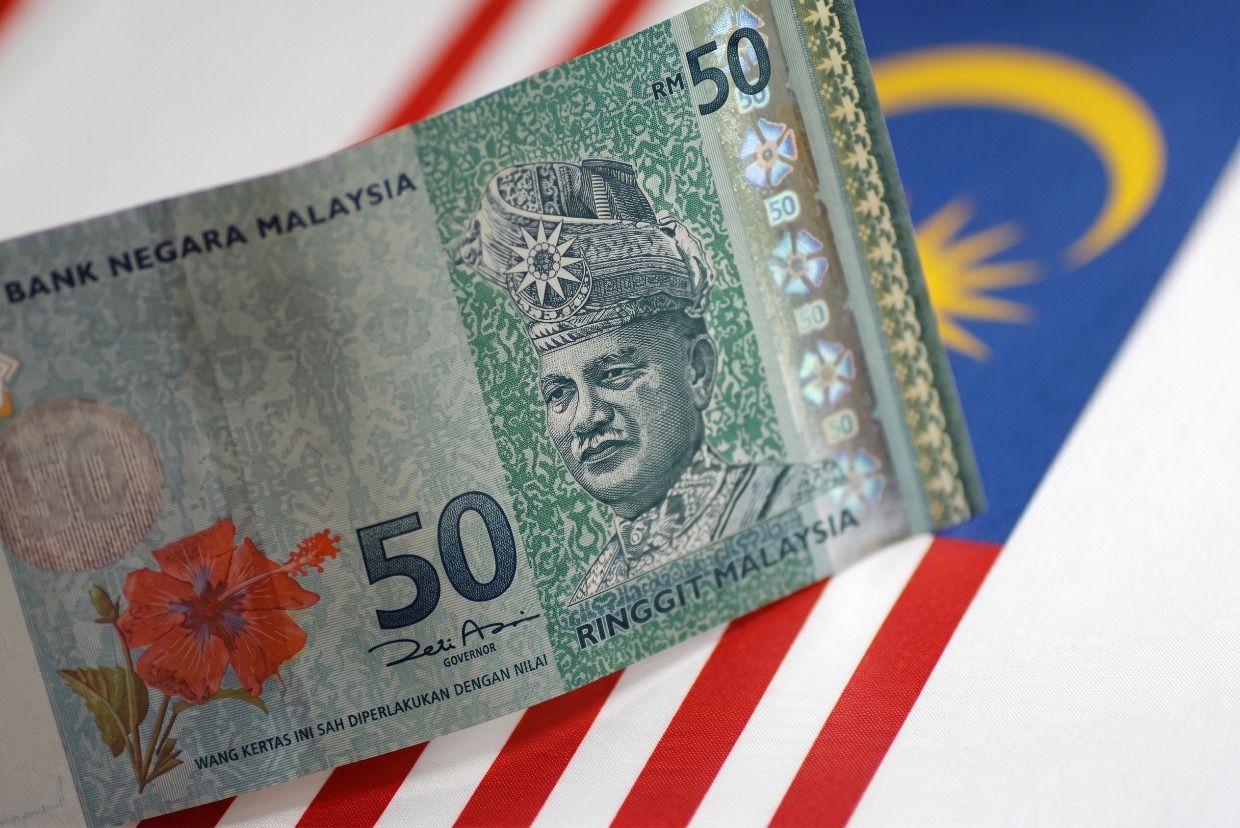
Malaysia's currency is primed for a meaningful recovery in the second half of the year, reversing a disappointing start that saw it underperform peers across Asia. Analysts are increasingly optimistic about ringgit strength, with forecasts suggesting the currency could appreciate substantially against the dollar as government measures to boost foreign-exchange inflows take hold and the country's economic fundamentals remain resilient.
The ringgit's trajectory has improved markedly since Bank Negara Malaysia announced on June 24 its intention to intensify efforts aimed at encouraging companies to repatriate and convert their overseas earnings. Major financial institutions have responded with concrete forecasts reflecting growing confidence in the currency's prospects. Royal Bank of Canada projects the ringgit could reach 3.95 per dollar by the close of this year, while analysts at Australia & New Zealand Banking Group are even more optimistic, predicting a move to 3.80—a level that would represent the strongest performance against the greenback since 2015.
These forecasts carry particular weight given the track record of such measures. Bank Negara Malaysia deployed similar initiatives in 2024 to great effect, successfully engineering a turnaround after the currency had fallen to its weakest point against the dollar since the 1998 Asian financial crisis. That recovery culminated in the ringgit becoming Asia's strongest-performing currency during the full year, a testament to the central bank's policy toolkit and the underlying economic drivers supporting the currency.
Several powerful economic forces are converging to support ringgit appreciation. Malaysia's export sector is firing on all cylinders, with shipments surging 45 percent year-on-year in May, a remarkable pace that reflects both global economic resilience and Malaysia's strategic positioning in supply chains benefiting from the artificial intelligence revolution. The country's data centre sector has attracted significant investment as global technology firms expand computing capacity, while electrical and electronic products continue to command strong international demand. These export dynamics translated into a record monthly trade surplus of 40 billion ringgit in May, providing a structural underpinning for currency strength.
The appeal of Malaysian assets has intensified as economic conditions improve. Global investment funds channelled approximately 2.1 billion dollars into local ringgit-denominated bonds through June 29, a figure that puts the market on track for its largest monthly inflow since May 2025. This steady stream of foreign capital seeking exposure to Malaysian debt instruments represents a direct source of demand for ringgit, as international investors must acquire the currency to invest in local securities. The combination of trade surpluses and financial inflows creates a virtuous cycle supporting currency appreciation.
Bank Negara Malaysia's strategic focus on converting foreign currency deposits held by local businesses into ringgit represents a crucial mechanism linking Malaysia's trade surplus to actual currency strength. Businesses accumulate foreign currency reserves through their export revenues, but unless those funds are converted into ringgit, they do not directly support the domestic currency. By implementing policies to encourage such conversions, Bank Negara is effectively tapping into a substantial pool of potential demand for the ringgit. Data from the first half of this year indicates that foreign currency deposits held by businesses increased during March and May, suggesting that incentive structures are already yielding results.
Abbas Keshvani, a macro strategist at Royal Bank of Canada's Singapore office, articulated the fundamental thesis driving analyst optimism, noting that Malaysia's solid trade surplus and strong inflows into ringgit-denominated bonds should translate into outperformance relative to other Asian currencies. He emphasized that measures explicitly designed to encourage conversion of foreign exchange reserves are the critical link that ensures Malaysia's trade strength translates into tangible currency appreciation rather than remaining trapped in corporate foreign currency accounts.
The strength of foreign direct investment inflows into Malaysia provides an additional layer of support for currency appreciation. International businesses investing in the country require ringgit to finance operations and acquisitions, creating demand that complements the flows from international bond investors and exporters' repatriation. This combination of multiple inflow channels suggests that the conditions underpinning ringgit strength are diverse and resilient, unlikely to evaporate if any single source of demand diminishes.
However, the currency's recovery path is not without obstacles. The United States Federal Reserve's increasingly hawkish policy stance exerts countervailing pressure on the ringgit and other emerging-market currencies. As the Federal Reserve signals its commitment to maintaining higher interest rates for longer, capital flows that might otherwise gravitate toward emerging markets are diverted toward dollar-denominated assets offering elevated yields. This structural headwind means that the ringgit's recovery, while supported by fundamental Malaysian factors, occurs within a broader global environment that remains relatively supportive of dollar strength.
Domestic political developments also warrant investor attention as a potential source of volatility. Malaysia faces state elections that will serve as a crucial test of public support for Prime Minister Anwar Ibrahim and his ruling coalition ahead of national elections. Political uncertainty can trigger capital outflows and reduce foreign investor appetite for Malaysian assets, potentially tempering the ringgit's appreciation momentum. Market participants will be closely monitoring the electoral cycle for signs that political confidence remains solid or, conversely, shifts that might prompt reassessment of Malaysia's governance trajectory.
Despite these headwinds, the structural case for ringgit appreciation remains compelling. Malaysia's position as a beneficiary of global supply chain diversification and the artificial intelligence boom provides an enduring foundation for export growth and capital inflows. The central bank's demonstrated willingness and ability to deploy targeted measures encouraging foreign-exchange conversion shows institutional commitment to supporting the currency. As these factors coalesce throughout the remainder of this year, the consensus analyst view that the ringgit will recover substantially from its first-half weakness appears increasingly justified.

