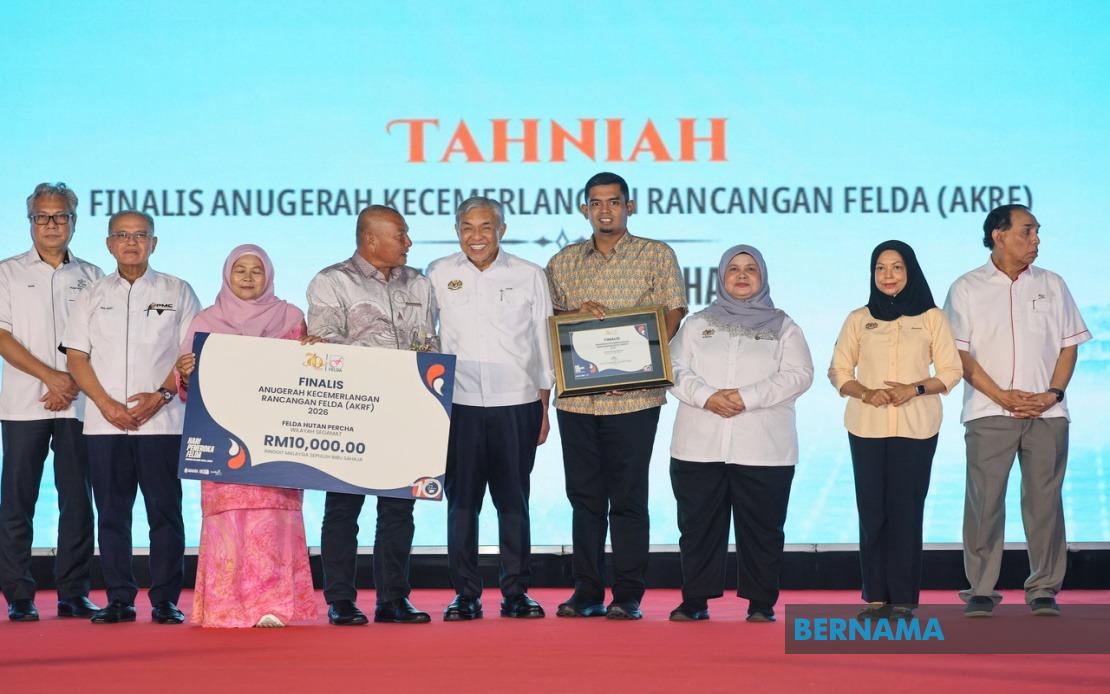
Deputy Prime Minister Datuk Seri Dr Ahmad Zahid Hamidi has signalled a fundamental shift in how Malaysia approaches rural development, moving away from a purely inward-looking strategy towards integration with regional and international economic frameworks. Speaking at the World Rural Development Day 2026 celebration held at Bandar Tun Razak Stadium in Maran, Ahmad Zahid, who doubles as Rural and Regional Development Minister, emphasised that the country's rural sector can no longer afford to operate in isolation. Instead, rural entrepreneurs must cultivate the ambition and capacity to compete in larger, more sophisticated markets beyond Malaysia's shores, particularly within ASEAN and the burgeoning global halal economy sector.
This strategic repositioning reflects a maturing perspective within Malaysia's economic planning that recognises the constraints of relying solely on domestic consumption and supply chains. Ahmad Zahid's message carries particular weight given Malaysia's historical strength in halal products and agricultural exports, sectors where rural communities hold significant competitive advantages. The deputy prime minister stressed that Malaysian rural brands possess untapped potential and must shed any hesitancy about entering international markets. He articulated a vision where rural networks operate as nodes within a borderless economic ecosystem rather than discrete, self-contained units bound by geography. This conceptual shift has practical implications for how rural development policies are formulated, funded, and implemented across the country.
The government's commitment to this vision is evident through the introduction of the National Rural Economy Agenda, which Ahmad Zahid positioned as a comprehensive blueprint guiding the next phase of rural development initiatives. This agenda represents an evolution from earlier frameworks that prioritised basic infrastructure provision towards a more sophisticated approach encompassing economic competitiveness, market integration, and human capital development. By framing rural development within a broader economic and geographical context, the ministry signals to stakeholders that opportunities increasingly lie beyond traditional rural boundaries and that policy support will follow accordingly.
Tangible evidence of this policy shift manifests in newly launched initiatives designed to facilitate market expansion and product positioning. The ministry has rolled out programmes including RisSMart and IkonDesa over the past three years, specifically engineered to help rural entrepreneurs broaden their market reach and enhance their commercial visibility. These interventions go beyond simple subsidies or grants; they represent structured attempts to build marketing capacity and brand awareness among rural business operators. The results, according to Ahmad Zahid's remarks, have been encouraging on paper. More than 7,000 new rural entrepreneurs have been cultivated through these programmes, collectively creating approximately 15,000 employment opportunities and generating sales revenues exceeding RM1.77 billion. These figures suggest a functioning ecosystem beginning to produce measurable economic returns, though questions about sustainability and equitable distribution of benefits across different regions and communities remain pertinent.
Beyond entrepreneurship and commerce, Ahmad Zahid highlighted progress in human capital development as fundamental to long-term rural competitiveness. The admission of nearly 500 Orang Asli students to universities represents a historic benchmark, reflecting increased emphasis on educational access for historically marginalised indigenous communities. Higher educational attainment among rural populations, particularly among disadvantaged groups, carries multiplier effects extending far beyond individual career trajectories. It builds local capacity for innovation, professional service provision, and informed economic decision-making within rural communities themselves. This emphasis on education signals recognition that sustainable rural development depends fundamentally on the knowledge and skills available within communities, not merely external investments.
Infrastructure development remains central to rural progress, and Ahmad Zahid presented an extensive catalogue of improvements undertaken during the 12th Malaysia Plan period. Nearly 5,000 kilometres of rural roads underwent upgrading, addressing historical connectivity deficits that constrain economic activity and service delivery in remote areas. Simultaneous expansion of electricity access to over 7,000 homes and clean water supply to more than 10,000 rural households represent critical investments in basic living standards. Additionally, nearly 10,000 homes were either constructed or refurbished, benefiting approximately 40,000 rural residents. These figures collectively demonstrate substantial capital allocation towards rural infrastructure, though the adequacy of such investments relative to outstanding rural development needs across Malaysia's diverse geography remains debatable.
The official recognition of World Rural Development Day within Malaysia's observance calendar carries symbolic significance beyond immediate policy implications. The United Nations General Assembly proclaimed World Rural Development Day on September 6, 2024, designating July 6 as the annual date of observance to commemorate establishment of the Centre on Integrated Rural Development for Asia and the Pacific. Malaysia joined fellow member states in officially observing the occasion from 2026, with the first global celebration having occurred on July 6, 2025. This international framework provides convenient alignment with global development agendas while offering opportunities for Malaysia to position itself as a regional leader in rural economic innovation and integration.
The gathering also saw attendance from Pahang Menteri Besar Datuk Seri Wan Rosdy Wan Ismail and Rural and Regional Development Deputy Minister Datuk Rubiah Wang, underlining the multi-level political commitment to rural development agendas. Such high-level participation in rural development events, particularly outside major urban centres, traditionally signals government prioritisation of the issue within the broader policy landscape. For Malaysian rural communities and entrepreneurs, such visible political support ostensibly translates into enhanced resource allocation and policy continuity, though delivery mechanisms and actual impact remain variable across different states and rural constituencies.
Ahmad Zahid's articulation of rural development philosophy carries implications extending beyond Malaysia's borders. As Southeast Asian economies increasingly integrate through trade agreements and supply chain interconnections, rural sectors across the region face simultaneous pressures and opportunities. Malaysian rural entrepreneurs positioned effectively to participate in regional value chains could potentially capture disproportionate economic benefits. Conversely, those remaining inward-focused risk marginalisation as regional economic centres consolidate. The deputy prime minister's messaging thus reflects broader regional economic dynamics shaping rural development trajectories across ASEAN nations.
Looking forward, the challenge for Malaysia involves translating rhetorical commitment to international market integration into practical support mechanisms that rural entrepreneurs can actually access and utilise. International market entry requires not merely entrepreneurial ambition but specific capabilities in quality control, regulatory compliance, logistics, and market intelligence that rural businesses frequently lack. Whether existing programmes like RisSMart and IkonDesa adequately address these capability gaps, and whether they reach rural entrepreneurs beyond major states and urban-adjacent areas, will determine the ultimate success of Ahmad Zahid's vision. The next critical evaluation point will involve assessing whether the RM1.77 billion in sales revenues represents sustainable growth patterns or temporary gains concentrated among select beneficiaries.

