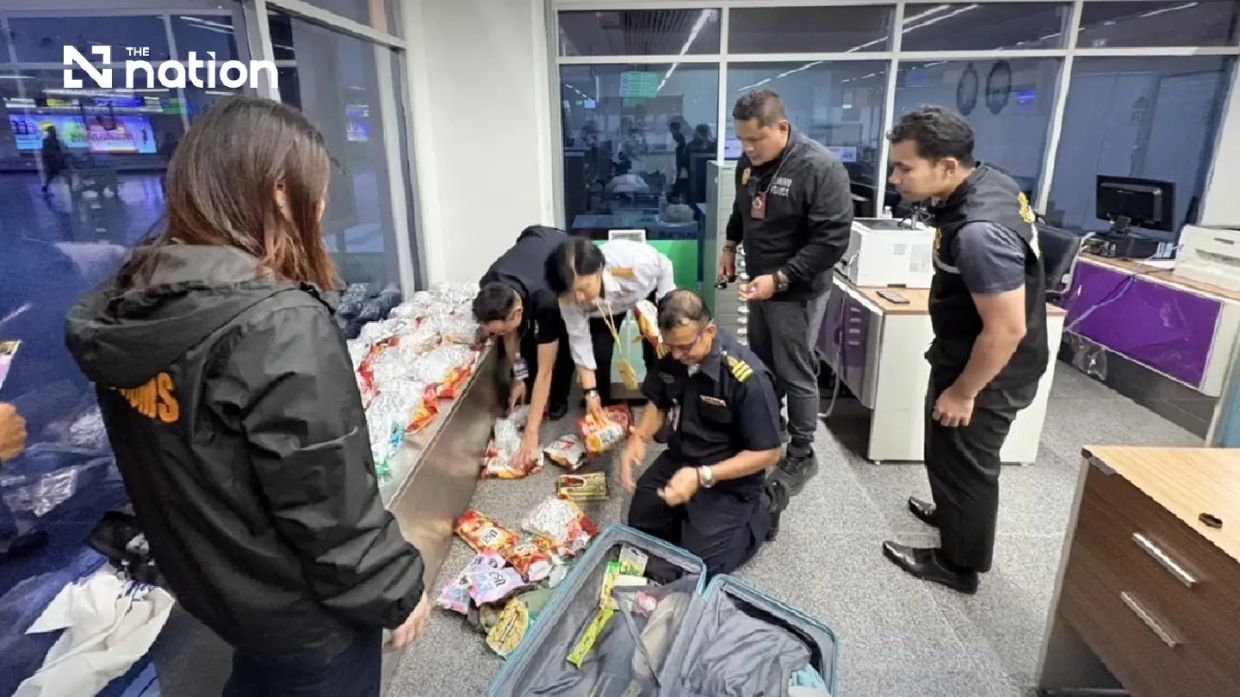
A 30-year-old Russian national faces smuggling charges following his arrest at Phuket International Airport on Wednesday, July 8, when Thai customs authorities discovered a substantial quantity of cannabis hidden within his checked luggage. The interception occurred at the airport's international departure terminal in Mai Khao subdistrict, Thalang district, marking another significant drug seizure at one of Thailand's busiest travel hubs.
During a routine inspection of two blue BP WORLD wheeled suitcases, customs officer Rawin Kanokakorn and his team uncovered cannabis flowers and resin totalling 17.6 kilogrammes in gross weight. Authorities identified the suspect as Sergei Chalabari, who was in the process of clearing the departure terminal when the discovery was made. The luggage itself, weighing approximately eight kilogrammes before contents were seized, became evidence in the case.
The contraband was carefully packaged to evade detection. Investigators found 35 vacuum-sealed packages of cannabis flowers with a combined gross weight of 11.4 kilogrammes, supplemented by 12 separate packs of cannabis resin weighing 6.2 kilogrammes collectively. The deliberate concealment strategy, involving multiple sealed packages distributed across the suitcases, suggests an attempt to transport a commercial quantity of narcotics out of Thailand.
When questioned, Chalabari acknowledged ownership of both the suitcases and their contents, effectively admitting to possession of the drug materials. Thai authorities subsequently charged him with attempting to smuggle goods beyond Thailand's borders without clearing customs procedures—a serious offense under Thai drug smuggling legislation. The straightforward admission expedited the legal process, though additional investigations continue.
This seizure underscores the persistent challenges Thai authorities face in managing international drug trafficking through major airports. Phuket International Airport, serving millions of tourists annually, remains a critical enforcement point where customs and police collaborate to intercept contraband. The operation involved coordination between multiple agencies, including the airport's customs house and local police investigative units, demonstrating institutional cooperation in narcotics prevention.
The incident reflects broader regional drug trafficking patterns. Cannabis remains highly controlled throughout Southeast Asia, with Thailand historically maintaining strict penalties for possession and transportation of controlled substances. Although Thailand initiated limited cannabis decriminalization measures in certain contexts, international trafficking remains prosecuted vigorously, particularly at departure points where foreign nationals attempt to export narcotics.
For tourists and visitors, the arrest serves as a reminder that Thailand's drug laws apply uniformly regardless of nationality. Foreign nationals arrested for drug offenses face the same legal consequences as domestic offenders, including extended detention, trial proceedings, and potential imprisonment. The severity of penalties reflects the Thai government's zero-tolerance stance toward narcotics trafficking, irrespective of quantity or circumstance.
The investigation proceeded under supervision of Pol Col Salan Sankhisasanakun, superintendent of Sakhu Police Station, and Pol Lt Col Rattanawut Nukaew, deputy superintendent for investigation. Customs leadership included Nucha Jeeradit, chief of the Phuket Airport Customs House; Thanomjit Burirak, director of the customs control division; and Charoenporn Jaengwansuk, chief of the investigation and suppression section. These officials coordinated enforcement strategy and evidence handling.
Chalabari was transferred to Sakhu Police Station for formal legal proceedings, where investigators will conduct comprehensive questioning and prepare prosecution documentation. Pol Capt Chaphinya Surithamkul, deputy investigation inspector, received custody of the suspect for further action. The case will likely proceed through Thai courts, where evidence quality and witness testimony will determine sentencing recommendations.
This seizure contributes to Thailand's broader efforts to maintain border security and combat international drug networks. Airports represent critical vulnerability points where law enforcement concentrates resources and surveillance. The successful interception demonstrates effective checkpoint procedures and officer training in recognizing concealment techniques commonly employed by traffickers.

