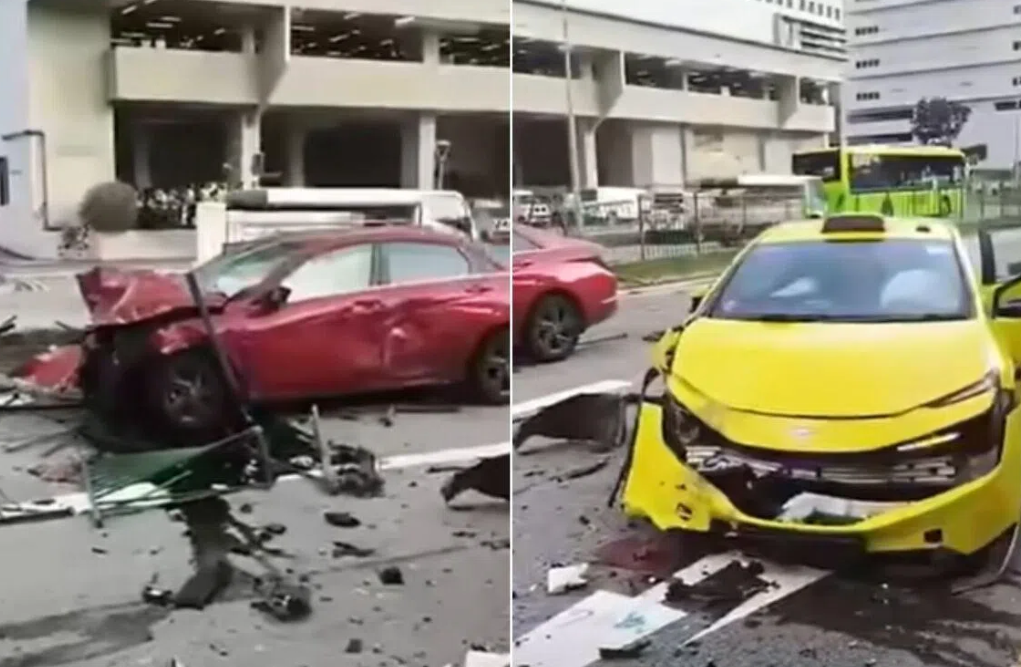
A 36-year-old man identified as Mohamed Firdouz Mohamed Akram appeared in a Singapore court on June 19 facing a battery of serious charges stemming from a vehicle collision in Kallang, including allegations that he was under the influence of methamphetamine when he drove. The incident underscores ongoing concerns about drug-impaired driving across the region and the enforcement mechanisms deployed to tackle such behaviour.
The alleged incident unfolded on the morning of June 17 when Firdouz is accused of operating a motorcar along Kallang Bahru around 8am despite reportedly having consumed Ice, the street name for methamphetamine. According to court documents, his vehicle collided with a taxi, leaving two occupants injured. The taxi driver, aged 60, sustained chest pains in the collision, whilst his passenger, a 43-year-old woman, reported tailbone injuries. Both sought medical attention following the accident.
Court records indicate that Firdouz failed to maintain adequate control of his vehicle, precipitating the crash. Police statements suggest the driver then abandoned his car at the scene and fled before law enforcement arrived, compounding the seriousness of the allegations against him. Within hours, officers had established his identity and subsequently located him. He was arrested within five hours of the initial report being filed, demonstrating the rapid investigative work undertaken by Singapore authorities.
The charges laid against Firdouz encompass multiple traffic violations alongside drug-related offences. He faces counts of driving without holding a valid Class 3 licence, as well as causing bodily injury to two individuals through reckless operation of a vehicle. Additionally, two weapon possession charges have been brought against him, suggesting a pattern of concerning behaviour beyond the singular incident.
Investigators conducting a search of Firdouz's vehicle recovered items that paint a troubling picture of his circumstances. Police discovered suspected drugs, drug-related paraphernalia, vaporisers and a knuckleduster inside the motorcar, all of which have been retained as evidence. Separately, court documents reveal that officers located two knives in his possession inside a room at the Village Hotel Katong on Marine Parade Road around 1pm on June 17, further adding to the arsenal of charges.
The case highlights vulnerabilities in road safety where substance abuse combines with vehicle operation, a concern that extends throughout Southeast Asia. Singapore's legal framework provides significant penalties for such conduct, reflecting the severity with which authorities treat the matter. Those convicted of driving under the influence of controlled substances face potential imprisonment for up to one year, fines reaching S$10,000, or both sanctions combined. Offenders convicted of causing injury through dangerous driving face parallel or enhanced penalties, including imprisonment up to one year and fines ranging from S$2,000 to S$10,000.
Malaysian motorists and transport authorities observe such enforcement action with particular interest given cross-border traffic patterns and the shared challenges facing road safety administrators throughout the region. The incident serves as a reminder of how quickly situations can escalate when impaired driving intersects with public roads. The taxi driver and passenger in this case, ordinary individuals going about their daily routines, became victims of circumstances beyond their control.
The swift police response and arrest within hours of the report demonstrates operational effectiveness, yet also raises broader questions about how such incidents might be prevented through public awareness campaigns and continued monitoring of drug usage patterns affecting driving populations. Singapore's approach combines rapid apprehension with substantive legal consequences, a model that contrasts with varying enforcement levels observed elsewhere in the region.
Firdouz's case will be mentioned again in court on July 17, providing an opportunity for further legal proceedings and potentially plea arrangements. The interval allows investigators to consolidate their evidence and prosecutors to prepare their case. For the injured taxi driver and passenger, the legal process offers a formal avenue through which their suffering may be recognised and the perpetrator held accountable.
The convergence of multiple aggravating factors—substance abuse, dangerous driving, fleeing the scene, unlicensed operation and weapons possession—suggests Firdouz's circumstances reflect deeper personal difficulties. Nevertheless, the priority for legal systems across the region remains protecting public safety and ensuring that those who endanger others through reckless conduct face meaningful consequences. This incident exemplifies how quickly an ordinary morning commute can transform into a criminal matter with lasting consequences for multiple parties involved.

