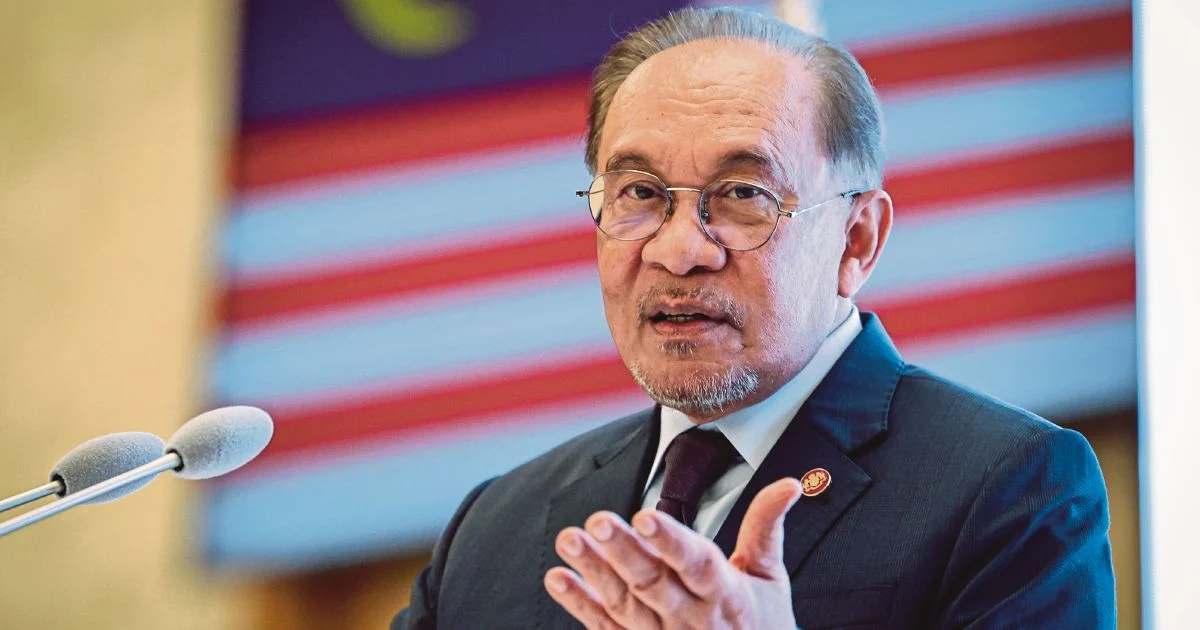
Prime Minister Datuk Seri Anwar Ibrahim has framed Turkmenistan's decision to award Petroliam Nasional Bhd (Petronas) a substantial stake in one of the world's largest natural gas fields as a significant endorsement of Malaysia's standing on the international stage. Speaking in Batu Kawan, the premier argued that the selection of Malaysia's national oil company reflects broader confidence from global investors and energy partners in the country's political stability, social cohesion, and competitive economic fundamentals. The remarks underscored how energy sector wins are being positioned as barometers of Malaysia's broader credibility in international markets and strategic partnerships.
The Turkmenistan assignment carries considerable weight within regional energy politics and Malaysia's hydrocarbon strategy. Petronas has long positioned itself as a regional energy champion capable of managing complex, high-value operations across multiple jurisdictions. The involvement in one of the planet's most prolific gas-producing regions opens fresh revenue streams for the national company and diversifies its operational footprint beyond traditional Southeast Asian and South China Sea assets. For a company facing increasing pressure to demonstrate growth prospects amid the global energy transition, access to world-class reserves in Central Asia represents a tangible expansion of its asset base and production capacity.
Anwar's framing of the agreement as a confidence vote in Malaysia merits examination within the context of recent regional developments. The Prime Minister has consistently sought to rehabilitate Malaysia's international image following earlier periods of political turbulence and governance concerns. A major energy partnership with an important Central Asian nation—a region where geopolitical competition between China, Russia, and Western powers remains intense—suggests that Malaysian institutions and leadership retain credibility among diverse international stakeholders. This perception is particularly valuable given competing narratives about Southeast Asian governance and the contest for influence across the Indo-Pacific.
The gas field in question represents one of the planet's most significant hydrocarbon reserves, with production potential that extends across decades. Turkmenistan, as a major exporter, jealously guards access to its energy wealth and typically allocates stakes to partners deemed capable of delivering technical expertise, capital, and reliable execution. The selection of Petronas over competing international majors indicates confidence in the company's engineering capabilities, project management experience, and ability to navigate complex international operations. Such validation is important for Petronas' reputation in global energy markets, particularly as it competes with larger Western and Asian counterparts for premium resource opportunities.
The timing of the announcement also merits attention within Malaysia's broader economic repositioning strategy. The government has emphasised diversifying away from traditional revenue sources and building competitive advantages in high-value sectors. Energy sector success stories provide political capital domestically while signalling economic vitality to foreign investors across multiple industries. When major international partnerships are secured, the spillover effects extend beyond hydrocarbons to enhance Malaysia's overall attractiveness as a destination for foreign direct investment, talent, and technology transfer.
For Petronas specifically, the Turkmenistan assignment addresses strategic questions about the company's medium-term growth trajectory. Like national oil companies globally, Petronas faces pressure to balance shareholder returns with managing energy transition risks. Access to substantial new reserves allows the company to maintain production growth, support domestic energy security, and generate government revenue for the foreseeable future. However, the company must also demonstrate capability in lower-carbon energy ventures and emerging sectors. The Turkmenistan deal represents one pillar of a diversified strategy necessary for long-term sustainability.
The Central Asian energy sector presents both opportunities and complexities for Malaysian players. Geopolitical sensitivities, supply chain vulnerabilities, and the region's strategic importance in global energy markets mean that companies operating there navigate multiple layers of political and commercial risk. Petronas' existing international experience and relationships with major governments position it to manage these challenges more effectively than less experienced competitors. Successful execution of the Turkmenistan partnership will likely enhance the company's reputation for managing complex geopolitical environments and could open doors to additional Central Asian opportunities.
Regionally, Malaysia's deepening energy partnerships with non-Southeast Asian actors reflect a broader internationalisation strategy for the country's national champions. As ASEAN economies mature and intra-regional competition intensifies, Malaysian companies increasingly pursue opportunities in Africa, the Middle East, Central Asia, and beyond. This geographic diversification reduces dependence on regional markets and positions Malaysian firms as players in global rather than merely regional competitions. Petronas' Turkmenistan involvement exemplifies how national champions are expected to operate at planetary scale.
The agreement also carries implications for Malaysia's diplomatic positioning in Central Asia. Energy partnerships often serve as foundations for broader bilateral relationships encompassing trade, technology, and political cooperation. By securing a stake in Turkmenistan's gas sector, Malaysia establishes a durable economic link with a nation of strategic importance to multiple global powers. Such relationships provide leverage in multilateral forums and create constituencies within partner nations interested in deepening Malaysia's influence and involvement.
Looking ahead, successful delivery on the Turkmenistan project will be crucial for validating Anwar's confidence claims. Energy megaprojects frequently encounter delays, cost overruns, and operational challenges. Petronas will need to demonstrate not only technical proficiency but also ability to manage stakeholder expectations and navigate evolving political contexts in Central Asia. Failure to execute effectively would undermine the narrative of Malaysian competence and reliability that the government is actively promoting. Conversely, successful project development would provide tangible proof of Malaysia's capabilities and could catalyse additional international partnerships.

